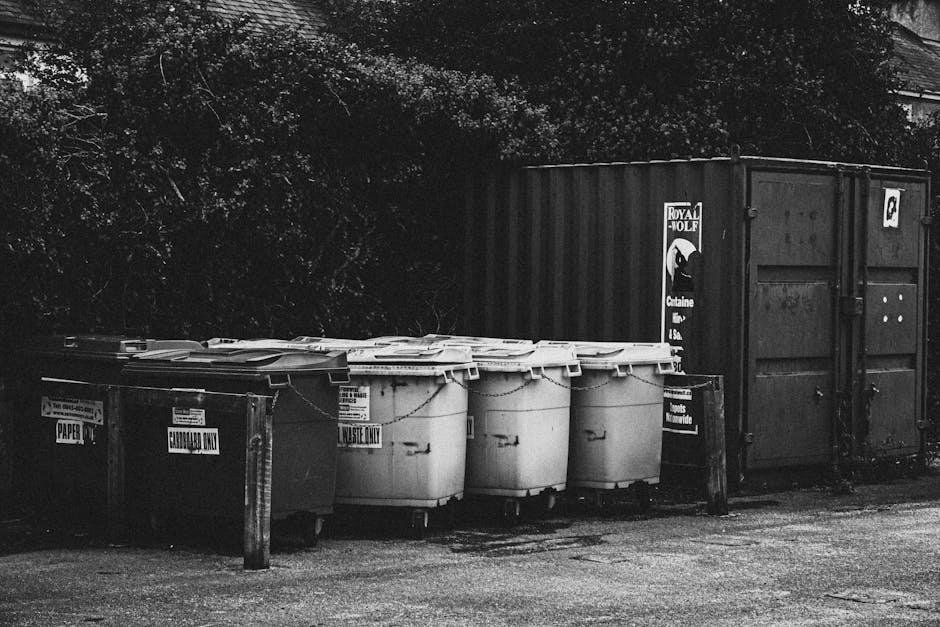
Bulky Waste Solutions in Bethnal Green: Council Collections
If you live or work in Bethnal Green, bulky rubbish can become a surprisingly awkward problem. One old wardrobe in a hallway, a broken mattress leaning in the shed, a few heavy boxes after a move - suddenly the room feels smaller and the job feels bigger than it should. That is exactly where Bulky Waste Solutions in Bethnal Green: Council Collections come in. They give you a structured way to clear larger items without turning the whole day into a backache and a logistics puzzle.
This guide explains how council collections usually work, what they are best for, where they fall short, and how to decide whether they are the right fit for your situation. You will also find practical tips, a comparison of common options, and a checklist you can actually use. Let's keep it simple, useful, and local.
Table of Contents
- Why Bulky Waste Solutions in Bethnal Green: Council Collections Matters
- How Bulky Waste Solutions in Bethnal Green: Council Collections Works
- Key Benefits and Practical Advantages
- Who This Is For and When It Makes Sense
- Step-by-Step Guidance
- Expert Tips for Better Results
- Common Mistakes to Avoid
- Tools, Resources and Recommendations
- Law, Compliance, Standards, or Best Practice
- Options, Methods, or Comparison Table
- Case Study or Real-World Example
- Practical Checklist
- Conclusion
- Frequently Asked Questions
Why Bulky Waste Solutions in Bethnal Green: Council Collections Matters
Bulky waste is not the same as your weekly bin. It usually means large household items that are too big, heavy, or awkward for normal collection. Think sofas, wardrobes, table tops, mattresses, bed frames, and other oversized items that do not fit neatly into the usual waste routine. In a dense place like Bethnal Green, where space is tight and stairwells can be narrow, that matters more than people expect.
Why? Because bulky items can sit around for weeks if there is no clear plan. They block rooms, make cleaning harder, and can become a safety issue. If an item is damp, damaged, or partly broken, it can also attract pests or create sharp edges and trip hazards. Not ideal, especially in flats and shared buildings.
Council collections offer a familiar, regulated route for getting rid of large waste responsibly. For many households, they are the first sensible option because they feel straightforward and trusted. You book, you prepare the items, and the collection is carried out in an organised way. Simple in theory. A little less simple in practice, as anyone who has tried to move a three-seater sofa down a narrow landing will know.
There is also a wider community benefit. Proper bulky waste collection helps reduce fly-tipping, avoids clutter on pavements, and supports cleaner communal areas. In neighbourhoods with busy streets and limited storage, a reliable collection system is not just convenient; it helps keep the area more liveable. That is the part people forget until they see a mattress left by a bin store and think, well, someone's day just got worse.
Expert summary: If your bulky waste is legal to remove, safely accessible, and not urgent, council collection is often the most practical starting point. If you need speed, lifting support, or multiple mixed items, you may need to compare alternatives carefully.
How Bulky Waste Solutions in Bethnal Green: Council Collections Works
While details can vary by local authority, council bulky waste collections in London generally follow a similar pattern. You identify the items, check what is accepted, arrange a collection slot, and place the waste where the crew can access it safely. The process sounds ordinary, but the little details make all the difference.
Start by listing exactly what you want removed. One chair is easy to forget in a quote request. Three chairs, a bed base, and a fridge freezer are not. Councils often set limits on the type and number of items per visit, and some items may need special handling. That is why a clear item list saves time and avoids disappointment.
Next, think about access. Can the items be carried from the property to the collection point without damage? Are there stairs, tight turns, shared entrances, or parking restrictions? In Bethnal Green, those practicalities matter more than people like to admit. A bulky waste collection is not only about the item itself; it is also about the path from the room to the vehicle.
Most council services ask you to prepare items in advance. That may mean moving them outside the property boundary, placing them in a designated communal area, or ensuring they are ready at an agreed time. If you are in a flat, you may need to coordinate with neighbours or building management. Annoying, yes. But much better than leaving things half-moved and causing a blockage.
It is also worth separating reuse from disposal. Some bulky items, especially furniture in good condition, may be better donated, sold, or repurposed. If an item has life left in it, council collection may not be the most sustainable route. For more on that mindset, you can look at the approach outlined in our recycling and sustainability guidance.
Typical council collection flow
- Identify the bulky items and their condition.
- Check whether the council accepts the items you have.
- Book a collection slot and confirm any fees or restrictions.
- Prepare the items so they are accessible and safe to lift.
- Place items out as instructed, then keep clear of the collection area.
- Keep the confirmation details in case anything needs to be checked later.
That process is usually enough for straightforward household clearances. For anything more complex, such as heavy loads, mixed waste, or awkward access, a more hands-on service may be easier to manage.
Key Benefits and Practical Advantages
The biggest benefit of council bulky waste collection is predictability. You know the route, the service style, and the general expectations. That can be a relief when you are already juggling moving boxes, renovations, or a full flat clear-out.
Another advantage is accountability. Councils operate with established procedures, so you are not guessing who is responsible if something changes. That does not make every collection perfect - real life still happens - but it does mean the process is usually clearer than improvised disposal arrangements. And honestly, clarity is underrated.
It can also be cost-effective for small, simple jobs. If you only have a few large items and the timing suits you, a council collection may be enough without needing a bigger service. For people who just want the sofa gone and the spare room back, that is often the sweet spot.
There is a sustainability angle too. Proper council-led disposal is generally better than leaving items in communal spaces or resorting to quick-fix dumping. It reduces the chance of items ending up where they should not. That matters in busy parts of Bethnal Green where one abandoned mattress can become a neighbourhood eyesore in no time.
In practical terms, the service can also save your back. Let's face it, moving heavy items with one half-helpful friend and a wobbling trolley is a dangerous hobby. If lifting, carrying, or loading would be difficult, a planned collection is a much safer way forward.
Benefits at a glance
- Clear, structured removal process
- Suitable for common household bulky items
- Less risk of fly-tipping or improper disposal
- Potentially lower cost for small, simple collections
- Helpful for renters, owners, landlords, and managing agents
- Reduces lifting strain and property clutter
Who This Is For and When It Makes Sense
Council bulky waste collections are a strong fit for people who have a manageable number of items, enough time to book, and straightforward access. If that sounds like you, it may be the neatest option available.
Homeowners often use this route after a furniture upgrade or a clear-out before decorating. Tenants use it when moving out and trying to leave the property in better shape than they found it. Landlords and letting agents may need it between tenancies, especially when previous occupants have left behind mixed or unwanted items. In shared buildings, it can also help when communal storage areas become overcrowded with abandoned belongings.
It makes sense when the waste is bulky but not especially complex. A mattress, a dismantled shelf unit, a single armchair, a coffee table, a broken cot - these are the kinds of jobs where a council collection can work well. If the load becomes more mixed, very heavy, or time-sensitive, you should compare your options before booking anything.
Ask yourself a few honest questions. Do you have time to wait for the appointment? Can you move the items to the required collection point? Are the items accepted by the service? If the answer to any of these is "not really," then a different approach may save time and stress.
There is no prize for making disposal harder than it needs to be. You want the room clear, the job done, and the mess gone. Fair enough.
Step-by-Step Guidance
Here is a practical way to approach bulky waste collection without missing the small stuff.
1. Sort the items properly
Separate furniture, electricals, and general household waste. A single neat pile is easier to assess than a random mix of items. If something can be reused or donated, set it aside first. Good judgement here saves unnecessary disposal costs and keeps useful items out of the waste stream.
2. Check the item condition
Damaged items are fine in many cases, but unsafe items need care. If something has sharp splinters, protruding nails, loose glass, or unstable sections, make it safer before anyone tries to move it. A bit of tape, wrapping, or dismantling can help.
3. Measure awkward pieces
This is the bit people skip, then regret later. Measure wider items like wardrobes, bed frames, and sofas, especially if they need to pass through a narrow hallway or stairwell. The item may be accepted, but the access route can still be the problem.
4. Confirm booking requirements
Check what information is needed. You may need item counts, access notes, or proof of address. If your collection depends on a fixed slot, write it down somewhere visible. On a busy week, that small note can save a lot of faff.
5. Prepare the collection point
Move items as instructed and keep the route clear. If you live in a building with shared entrances, make sure the collection does not block access for others. It is a tiny courtesy, but it keeps everyone happier.
6. Keep an eye on the timing
Collections may happen in a time window rather than at a precise minute. That means the items should be ready before the crew arrives. Do not leave final tidying for the last moment unless you enjoy a mild panic at 7:40 in the morning.
7. Check what was taken
Once the collection is complete, confirm that everything requested has gone and nothing else has been left behind. If you have mixed items, especially in a landlord or property-management context, a quick visual check is worth doing.
Expert Tips for Better Results
A good bulky waste job is usually won before anyone lifts a thing. The planning is what makes it smooth.
Tip 1: Group items by type. Furniture together, bedding together, electricals together. It makes booking easier and avoids confusion during collection.
Tip 2: Take photos before you book. Not because you need to be dramatic about it, but because a quick image helps you remember the scale and condition later. If you are comparing collection options, photos are even more useful.
Tip 3: Think about dismantling. A flat-pack wardrobe may be far easier to remove in sections than as one large lump. If you have the tools and it is safe to do so, a bit of disassembly can make the whole job simpler.
Tip 4: Keep pathways clear. This sounds obvious. It rarely is. Shoes, recycling boxes, prams, and random bags tend to gather where they should not. Clear the route first.
Tip 5: Check if anything can be reused. A scratched coffee table may still have life in it. A working desk chair might be passed on. Reuse is often the better outcome if condition allows it.
Tip 6: Compare cost against convenience. A council collection may suit a smaller job, but if you need lifting help, extra items removed, or quicker turnaround, a dedicated collection service may be the more practical choice. You can review the company's pricing and quotes information if you are weighing up value rather than just headline cost.
One small, slightly nerdy observation: the people who prepare best are usually the people who finish fastest. Funny how that works.
Common Mistakes to Avoid
Bulky waste collections go wrong in fairly predictable ways, which means you can avoid most problems with a bit of attention.
Leaving items too late. If you wait until the day before a move or decorating start date, the pressure rises fast. Booking early gives you breathing room.
Assuming every item is accepted. Some items need separate handling. Electricals, hazardous materials, and certain oversized goods may have restrictions. Always check.
Forgetting access issues. A collection can be delayed if the route is blocked, the item is too large to carry safely, or parking is impossible at the time. Access matters as much as the waste itself.
Mixing reusable items with rubbish. Once it is all piled together, the chance of a good item being thrown away increases. Separate the keep, donate, and dispose piles early.
Not measuring large furniture. This is one of those mistakes that feels minor until a wardrobe jams in the doorway and everyone goes very quiet.
Ignoring property rules. In blocks of flats and managed buildings, there may be rules about where waste can be placed. A quick check with building management avoids awkward conversations later.
Tools, Resources and Recommendations
You do not need a huge toolkit, but a few practical items can make bulky waste handling much easier.
- Tape measure for checking dimensions and doorway clearance
- Gloves for grip and basic hand protection
- Strong bags or boxes for loose small items around the main waste
- Screwdriver or hex key set if dismantling furniture safely
- Marker pen and labels to separate keep, donate, and dispose items
- Phone camera for documenting item condition before collection
If you want to understand the company background before booking any removal support, the about us page is a sensible place to start. For practical service questions or to get moving, the contact page is the next step.
For customers who care about safe handling, there is also useful information on health and safety standards and insurance and safety. Those are the pages people skip right up until they really want reassurance, and then suddenly they matter a lot.
If you need to understand how a company handles personal information, payments, or service terms, those trust pages are worth reading too. They are not glamorous, but they are part of good decision-making. In practical terms, they help you know what to expect before anything is booked.
Law, Compliance, Standards, or Best Practice
For bulky waste, the most important principle is simple: dispose of items responsibly and in line with the applicable rules for the service you use. In the UK, waste is not something to leave by chance. Items should be handled by a legitimate route, especially where communal areas, public pavements, or mixed waste streams are involved.
There are a few best-practice points worth keeping in mind. First, do not leave bulky items in shared spaces unless the collection process specifically allows it. Second, make sure the waste is not blocked, hidden, or mixed with items that need separate handling. Third, if a service provider gives handling or access instructions, follow them carefully. That protects both you and the people collecting the items.
Safety is a big part of compliance in everyday terms. Heavy lifting, broken timber, sharp edges, and glass can all create avoidable injury risks. If an item looks too awkward to move safely, it probably is. Better to pause than force it. A slow job is still better than a strained back and a damaged hallway wall.
Trust also matters. If you are checking a provider's operating standards, payment process, or complaint route, those pages are there for a reason. You can review the terms and conditions and payment and security information before booking, especially if you are arranging collection for a tenant, landlord, or managed property.
Options, Methods, or Comparison Table
Not every bulky waste problem needs the same solution. The right choice depends on urgency, item type, access, and how much work you want to do yourself.
| Option | Best For | Pros | Watch Out For |
|---|---|---|---|
| Council bulky waste collection | Small to moderate household clearances | Structured, familiar, often cost-conscious | May have item limits, timing windows, or access rules |
| Private removal service | Mixed, heavy, or time-sensitive jobs | More flexible, often includes lifting and loading | Usually costs more than a basic council collection |
| Self-haul to a disposal site | People with transport and lifting ability | Can be efficient if you already have a vehicle | Physical effort, loading risk, time, and trip logistics |
| Reuse or donation route | Items in decent condition | Sustainable, can save disposal effort | Not suitable for damaged or unsafe items |
For many Bethnal Green residents, the choice is not about finding the perfect solution. It is about finding the one that fits the week you are actually having. If you are moving on Friday and the flat is full of broken furniture, speed probably beats theory.
Case Study or Real-World Example
Picture a typical flat clear-out in Bethnal Green on a rainy Wednesday morning. A tenant is moving out, the spare room still has an old mattress, a desk with one wobbly leg, and two broken shelving units. Nothing dramatic, but enough to make the property feel unfinished and a bit stressful.
The first instinct is often to drag everything downstairs and hope for the best. Then reality arrives: a narrow stairwell, a communal entrance, and the desk that somehow became heavier overnight. Instead, the smarter approach is to sort the items, measure the largest piece, confirm collection rules, and prepare the access route before the booked slot.
In that kind of situation, council collection can work well if the items are accepted and the timing lines up. If the tenant is on a deadline and the property needs to be fully cleared in one visit, a more flexible removal option may be easier. The right answer depends on the pressure points: time, access, and the number of items. That is usually the real story.
The lesson? Don't start with the rubbish. Start with the plan.
Practical Checklist
Use this before you book any bulky waste collection in Bethnal Green.
- Have I listed every item that needs removing?
- Do I know which items are reusable, recyclable, or disposable?
- Have I checked whether the service accepts all of these items?
- Have I measured any awkward or oversized furniture?
- Is the access route clear and safe?
- Do I need to dismantle anything first?
- Have I checked building rules or communal waste instructions?
- Do I know the collection window and where items should be placed?
- Have I reviewed safety, payment, and terms information if I am using a provider?
- Am I choosing the option that best fits my timing and budget?
If you can tick most of those off, you are in good shape. If not, spend ten more minutes on the plan now. It saves an hour later. Sometimes more.
Conclusion
Bulky waste does not need to become a full-scale headache. With the right approach, council collections can offer a sensible, organised way to clear large household items in Bethnal Green without turning your week upside down. The key is to plan early, check item suitability, think about access, and choose the route that fits your situation rather than the one that sounds easiest at first glance.
For simple jobs, council collection is often enough. For heavier, more urgent, or more complicated clear-outs, a more flexible removal solution may be the calmer option. Either way, the best results come from a little preparation and a clear view of what needs to happen. Not glamorous, but effective.
If you want help comparing your options or getting a clearer idea of costs, start with pricing and quotes and then move on to the contact page if you need tailored guidance. A straightforward chat can save a lot of second-guessing.
Get a free quote today and see how much you can save.
And if all you wanted was to get the old sofa out and reclaim the room, fair enough - that's a genuinely good day's work.
Frequently Asked Questions
What counts as bulky waste in Bethnal Green?
Bulky waste usually means large household items that are too big for normal bin collection, such as sofas, mattresses, wardrobes, beds, tables, and other oversized objects. Some services also treat certain electrical items differently, so it is worth checking before you book.
How do council bulky waste collections usually work?
You normally identify the items, check what the service accepts, book a collection slot, and place the items where instructed. The exact process varies, but the main idea is the same: items must be ready, safe to collect, and accessible.
Are council collections better than private removal services?
Not always. Council collections are often a good fit for straightforward household items, especially if timing is flexible. Private removal services can be better for urgent jobs, awkward access, or heavier mixed loads. It really depends on the job.
Can I leave bulky waste in a communal area before collection?
Only if the service instructions allow it and building rules do not conflict. In shared buildings, it is important not to block access or create hazards for neighbours. When in doubt, keep items inside until the collection day.
Do I need to dismantle furniture before collection?
Not always, but it can help. Dismantling makes large items easier to move through tight spaces and reduces the risk of damage. If you can do it safely, it often makes the whole process smoother.
What if my bulky item is too heavy to move on my own?
That is a good sign you should not try to force it. Heavy items are safer when handled by experienced people with the right equipment. If you cannot move it safely, compare collection options that include lifting support.
How can I tell if something should be reused instead of thrown away?
If the item is still structurally sound, clean enough to use, and not unsafe, reuse or donation may be the better option. A scratched surface does not always mean waste. A broken frame or damaged padding is a different matter.
What should I check before booking a bulky waste collection?
Check the item list, access route, collection timing, accepted materials, and any building restrictions. If you are using a provider, also review their terms, safety information, and payment details so there are no surprises.
Is council bulky waste collection the cheapest option?
It can be cost-effective for small, simple jobs, but not every situation is the same. If you have multiple items, difficult access, or a tight deadline, a different option may offer better overall value even if the upfront cost is higher.
What happens if my waste is not collected?
If items are not collected, it is usually because of access problems, incorrect item placement, restricted materials, or a booking issue. Keep your confirmation details, check the instructions again, and contact the service or provider promptly.
How can I reduce the amount of bulky waste I create?
Buy less disposable furniture, maintain items well, repair where possible, and pass on usable pieces before they become waste. Small choices matter. One less broken chair in the hallway is still progress.
Where can I learn more about safety and sustainability before booking?
It helps to review the provider's health and safety policy, insurance and safety information, and recycling and sustainability guidance. Those pages give a clearer picture of how the service is run and what standards it follows.
What is the best next step if I need bulky waste removed soon?
Make a quick item list, check access, and compare your options right away. If you need a clearer idea of cost and service fit, use the contact page to ask a few direct questions. A short message now is usually better than wrestling with a sofa later.